Posts

Showing posts with the label treatment

Pharmacotherapy/Treatment Of Rheumatoid Arthritis (RA) And Osteoarthritis (OA)
Image
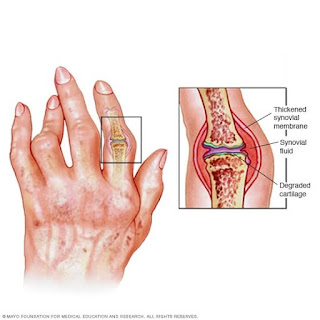
Arthritis is the umbrella term used to describe inflammation of joints. There are two types of arthritis. They are rheumatoid arthritis (RA) and osteoarthritis (OA). There is a third class which is juvenile idiopathic arthritis. But because there is no clear definition aside from arthritis that occurs in adolescents below the age of 17, many books don't include it. Rheumatoid and osteoarthritis Rheumatoid Arthritis (RA) In RA, the immune system suspects the soft lining around the joints as threats and attacks. It is just the way they attack foreign matters like bacteria and viruses. The immune system sends many fighting cells to the joint which accumulates. This leads to swelling. The swelling increases the pressure around the joints causing inflammation, stiffness and pain. Osteoarthritis (OA) In OA, there is loss of cartilage around the joints. This leads to a gradual degeneration of the cartilage making the bones around the joint to rub against each other. The robbing leads to i...

Pharmacotherapy/Treatment Of Diabetes

Image
Diabetes is a chronic disease that causes an increase in blood sugar. It happens when the body's pancreas is unable to produce insulin or when the body cannot effectively utilise insulin it produces and releases. Insulin is a hormone that regulates blood sugar. It is synthesized by the pancreas. Diabetes Glucose is the primary source of energy for the human body. Absorbed from the intestine it is metabolised by energy production (by conversion to water and carbon dioxide), conversion to amino acids and proteins or keto-acids stored as glycogen. Metabolism of glucose is regulated by complex orchestration of hormones activities. Dietary sugars are broken down into various carbohydrates. The most important is glucose, metabolised in nearly all body cells. Glucose enters the cell by facilitated diffusion (glucose transport proteins). This facilitated transport is stimulated very rapidly and effectively by an insulin signal (glucose transport into muscle and adipose cells is increased u...

Pharmacotherapy/Treatment Of Chronic Obstructive Pulmonary Disease (COPD)

Image
COPD Chronic obstructive pulmonary disease (COPD) is a disease of the lung. It is characterized by persistent reduction in air flow in the lungs. It can get serious and life-threatening if not properly managed. It affects more than 16 million people worldwide. COPD is the fourth leading cause of death worldwide and is expected to be the third leading cause by 2030. It is a progressive disease that affects people above 40 years of age. Function Of Lungs When a person with healthy lungs inhales air, it travels down their windpipe and into the airways of the lungs, known as bronchial tubes. Inside the lungs, the bronchial tubes branch into thousands of smaller, thinner channels called bronchioles. At the end of these tubes are bunches of tiny round air sacs called alveoli. There are more than 300 million alveoli in the lungs. Larger lungs have more alveoli. Read Also :  Treatment of asthma Capillaries are small blood vessels that surround the walls of the air sacs. Once air makes its ...

Pharmacotherapy/Treatment Of Congenital Malaria In Neonates

Image
Malaria is a disease spread by the anopheles mosquito. It is caused by a parasite. There are five types of parasites responsible for malaria with similar symptoms. They affect people of all ages from different geographical locations. Congenital Malaria treatment People in endemic areas like Nigeria can develop partial immunity to malaria. This immunity does not last for a long time. A newborn baby (neonates) born in endemic areas may acquire this partial immunity from the mother. This partial immunity can last for the first three months of life. That is why neonates don't often develop malaria. Read Also :  Treatment of Malaria Malaria infection in the first few months of life may be due to transplacental transfer of parasietized maternal erythrocytes (asexual stage of the parasite). This is called congenital malaria. This was first described in 1876. It occurs during pregnancy or perinatal labour. Malaria can be transferred to the baby even when the mother did not experience any a...

Pharmacotherapy/Treatment Of Bronchial Asthma

Image
Bronchial asthma is a chronic inflammatory disease of the airways. The airway narrows and swells, producing extra mucus. It has no cure. It is more common in children and appears more chronic in children than in adults. It is deadly if not managed. Bronchial Asthma It is associated with mast cells, eosinophils and T lymphocytes. Mast cells are allergic causing cells that release chemicals like histamine. Histamine is responsible for nasal stuffiness and dripping in a cold or hayfever constituting airways in asthma and itchy areas in a skin allergy. Eosinophils are white blood cells associated with allergy disease. T lymphocytes are also white blood cells associated with allergy and inflammation. This along with other inflammatory cells are involved in the development of an airway inflammation in asthma that contributes to the airway hyperresponsiveness, airflow limitation, respiratory symptoms and chronic disease. In certain individuals, the inflammation results in a feeling of chest t...

Pharmacotherapy/Treatment Of Chronic Kidney Failure (CKF)

Image
Chronic Kidney Failure Chronic kidney disease is the gradual loss of kidney function. Kidney filters waste, remove extra fluid from the body and control blood pressure. It also regulates electrolyte and activates vitamin D. In chronic kidney disease, dangerous levels of fluid, electrolyte and waste can build up in the body. Stages Of Chronic Kidney Failure Chronic Kidney failure is classified into stages. This is based in glomerular filtration rate (GFR) and manifestations of symptoms. Read Also:  Treatment of glomerulonephritis Stage 1: GFR rate is normal with evidence of kidney disease Stage 2 : GFR rate is <90ml Stage 3 : GFR rate is <60ml Stage 4: GFR rate is <40ml Stage 5 : GFR rate is <15 which means there is renal failure Symptoms There are no symptoms at an early stage of the disease. Symptoms develop over time. They include; 1. Nausea 2. Vomiting 3. Loss of appetite 4. Fatigue and weakness (Muscle twitching and cramp) 5. Erectile dysfunction 6. Sleep disorder...

Pharmacotherapy/Treatment Of Acute Kidney Failure (AKF)

Image
Acute kidney failure (acute renal failure) is a condition whereby the kidney suddenly fails to filter waste products from the body. This waste accumulates in the body at dangerous levels. It's lust from 4 hours to 3 days. It can be fatter and reversible. The kidney is an organ in the body responsible for removing extra fluid from the body. This helps to regulate blood pressure, electrolyte and activate vitamin D. Read Also:  Treatment of nephrotic syndrome Symptoms Of Acute Kidney Failure (AKF) Acute kidney failure sometimes comes without symptoms. Some symptoms may include; 1. Reduce urine output 2. Fluid retention 3. Shortness of breath 4. Fatigue 5. Confusion 6. Nausea 7. Weakness 8. Irregular heartbeat 9. Chest pain or pressure 10. Seizures or coma Acute Kidney Failure (AKF) Complications 1. Fluid buildup in lungs can cause cough and difficulty breathing 2. Chest pain 3. Acidic blood 4. Muscle weakness 5. Chronic kidney damage 6. Death Cause 1. Damage to the kidney cause by blo...

Consultation Service