Posts

Showing posts with the label advantage

Overview Of Pharmaceutical Chewable Tablet

Image
Chewable tablets which are required to be broken and chewed in between the teeth before ingestion. These tablets are given to the children who have difficulty in swallowing and to the adults who dislike swallowing. These tablets are intended to disintegrate smoothly in the mouth at a moderate rate either with or without actual chewing. Chewable tablets Chewable tablets are often employed when the active ingredient is intended to act in a localized manner rather than systematically. The composition of chewable tablets consists of gum cores, may or may not be coated. The core is composed of an insoluble gum base like fillers, waxes, antioxidants, sweeteners, flavoring agents. The percentage of gum base varies from 30-60%. Mannitol is widely used as an excipient in chewable tablets for its non-hygroscopic nature for moisture sensitive drugs. It is sweet and has a negative heat solution. Read Also :  Evaluation Of Pharmaceutical Tablet Characteristics Of Chewable Tablet 1. Easy to chew...

Advantage And Disadvantage Of Subcutaneous (SC) Injection

Image
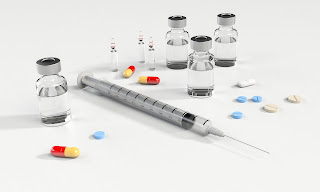
The subcutaneous route is one of the most flexible routes of drug administration, which can be used for short-term as well as long-term treatments. In subcutaneous injection, a small needle is used to inject medicine into the tissue layer between the skin and the muscle. It involves injecting a drug into the loose connective tissue between the dermis of the skin and the muscle layer. Subcutaneous (SC) A subcutaneous route is used when the drug's molecular size is too large to be effectively absorbed in the intestinal tract or when better bioavailability or a faster absorption rate is needed than the oral route. It is easy to administer and requires minimal skills, so patients can often self-administer the medication themselves. Common medications administered subcutaneously include insulin, heparin, and monoclonal antibodies. Read Also :  Advantage And Disadvantage Of Intradermal Injection The subcutaneous route of medication is contraindicated in an actively infectious or inflamed...

Advantage And Disadvantage Of Intravenous (IV) Therapy

Image
Intravenous (IV) infusion or injection is the administration of sterile liquid medication into the body via the vein. Access to the vein is achieved by the use of a syringe through a needle or a needleless port on an existing IV line or a saline lock (short venous access device). It is the fastest means of introducing medication into the systemic circulation. Intravenous injection Bioavailability of IV therapy is 100%. This is due to the fact that the drug does not suffer the same fate as oral drugs due to the first pass effect. IV are administered as instant bolus or continuous infusion. The drug goes to the right chamber of the heart and then to the lungs before coming back to the right chamber of the heart and of into the systemic circulation. Read Also :  Overview Of Route Of Drug Administration Any vein can be used. The veins of the forearm and wrist are the most common sites. However, the central IV route which involves placing a catheter located at the outlet of the superior...

Advantage And Disadvantage Of Transdermal Delivery System

Image
Transdermal therapeutic systems are high-tech patches that make treatment much more convenient and pleasant for the patient. Instead of having to take lots of tablets, patients often only have to apply a new patch. Transdermal delivery Transdermal patches usually last for 1 – 3 days, sometimes even longer. Although the patches can be applied anywhere over the body, chest, abdomen, upper arm, lower back, buttock, or mastoid regions are preferred. These regions are usually thin-skinned or highly vascular. Advantages Of Transdermal Drug Delivery System 1. Limiting hepatic first-pass metabolism, hence lower dose of medication can obtain desired plasma level compared with oral formulations Read Also :  Types Of Topical Medication 2. Transdermal medication delivers a steady infusion of a drug over a prolonged period of time 3. The simplified medication regimen leads to improved patient compliance and reduced the side effects, inter and intra-patient variability 4. No interference with ga...

Advantage And Disadvantage Of Rectal Medication

Image
Medications administered per rectum (PR) are ideal for local or systemic treatment, as the rectal mucosa has a blood and lymph supply that is capable of effective systemic absorption. Medication intended for rectal administration often comes in the form of a suppository or an enema. Suppositories are small, torpedo-shaped pellets that melt at body temperature, whereas enemas are substances in liquid form designed for rectal administration. Rectal Medication The rectum constitutes the final 20cm or so of the terminal gastrointestinal tract; approximately 2-3cms of this is the anal canal. Absorption from within the anal canal is via its highly vascular mucous membrane that is divided into folds or pillars, known as anal columns. Rectal epithelium is composed of non-keratinized and villi-free cells. This provides approximately 200 - 400 cm³ surface area for absorption. Read Also :  Advantage And Disadvantage Of Sublingual/Buccal Medication The anal canal is divided into areas above an...

Advantage And Disadvantage Of Sublingual/Buccal Medication

Image
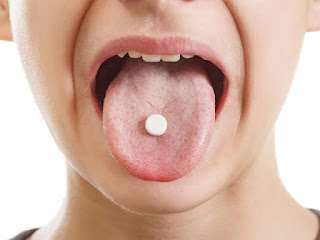
Sublingual and buccal medications are administered by placing them in the mouth, either under the tongue (sublingual) or between the gum and the cheek (buccal). The medications dissolve rapidly and are absorbed through the mucous membranes of the mouth, where they enter into the bloodstream. The medications are compounded in the form of small, quick-dissolving tablets, sprays, lozenges, or liquid suspensions. Sublingual and buccal medication Sublingual and buccal medication are prescribed when the drug needs to get into your system quickly or you have trouble swallowing medication. medication doesn’t absorb very well in the stomach or the effects of the drug would be decreased by digestion will be given via this route. Read Also :  Advantage And Disadvantage Of Oral Route Of Drug Administration Other Sublingual Dosage Forms Pharmaceutical preparations for sublingual administration are manufactured in the form of: 1. Sublingual tablet—tablets which easily melt in the mouth, dissolv...

Advantage And Disadvantage Of Topical Route Of Drug Administration

Image
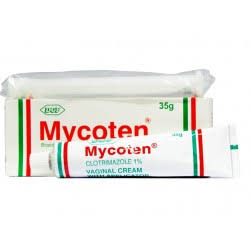
Topical medication is a medication that is applied to a particular place on or in the body. Most often topical administration means application to body surfaces such as the skin or mucous membranes to treat ailments via a large range of classes including creams, foams, ointments, gels, lotions, sprays, powders, aerosols, liniments, and drops. Many topical medications are epicutaneous, meaning that they are applied directly to the skin. Topical medications may also be inhalational, such as asthma medications, or applied to the surface of tissues other than the skin, such as eye drops applied to the conjunctiva, or ear drops placed in the ear, or medications applied to the surface of a tooth. Topical route of administration The definition of the topical route of administration sometimes states that both the application location and the pharmacodynamic effect thereof is local. In other cases, topical is defined as applied to a localized area of the body or to the surface of a body part re...

Advantage And Disadvantage Of Oral Route Of Drug Administration

Image
Oral administration of medication is a convenient, cost-effective, and most commonly used medication administration route. It is abbreviated as p.o or PO which is a Latin word per os meaning through the mouth. A few drugs taken orally are intended to be dissolved in the mouth. Other drugs taken orally are swallowed with large amounts of water. Advantage and disdavntage of oral drug Few drugs require local action without absorption such as antacids. For the others, the primary site of drug absorption is usually the small intestine, and the bioavailability of the medication is influenced by the amount of drug absorbed across the intestinal epithelium. The first-pass effect is an important consideration for orally administered medications. It refers to the drug metabolism whereby the drug concentration is significantly diminished before it reaches the systemic circulation, often due to the metabolism at the liver. Read Also :  Overview Of Route Of Drug Administration Advantage Of Oral...

Advantage And Disadvantage Of Suppository

Image
Suppository is a solid dosage form containing one or more active ingredients and is used to deliver the medication in the body cavities such as the rectum/vagina. It produces local action or systemic absorption of the active ingredients. It may melt at body temperature or dissolved or dispersed on a suitable basis that may be soluble or dispersible in water. Why suppository Suppository Base There are two types of suppository base: lipophilic and hydrophilic suppository. Lipophilic suppositories are fat and wax-based which can be melted according to the human body. The hydrophilic suppository is glycerin-based and requires liquid for dissolution. Read Also:  The Different Types Of Suppository These suppositories can be composed of, but not limited to, cocoa butter, coconut oil, glycerinated gelatin, hydrogenated vegetable oils and hard fats, polyethylene glycols (PEGs) and fatty acid esters of polyethylene glycol (PEG). Suppository Shape Suppositories have classically been cylindric...

Benefits Of NYSC Plantoon Leader

Image
In the NYSC Camp, the Corp members are divided into groups based on the last digit of their state code number. Each of these groups is called a platoon and the Corp member who heads a platoon is called a platoon leader. The NYSC official in-charge of a platoon is called a platoon Officer. NYSC Plantoon Leader benefit Many corps members ask what a platoon leader is all about. He or she assists the platoon officer in coordinating the activities and affairs of the platoon. Read Also :  NYSC Orientation Camp Day To Day Activities How To Become A Platoon Leader If you want to be a platoon leader, then you must head to camp early. The best time to go is a day before the official day the camp will commence. There are two methods of selecting a platoon leader by the platoon officer. It is by selection or election. NYSC Platoon Leader By Selection Immediately after clearance, get to know your platoon officer. Some may just pick a platoon leader from the first corp members that come. NYSC Pl...

Advantage And Disadvantage Of Chewing Stick

Image
Chewing stick Chewing stick is the oldest form of tooth cleaning in the world. This form of tooth cleaning has been replaced with modern toothbrush and paste. However, there has been some form of debate as to the most effective tooth cleaning method between both. This has led scientist into the study of both methods with some results. The term chewing stick is used by most countries of the world. However, some culture prefers the name ‘Miswak or Siwakin.’ They are obtained from different types of trees e.g. walnut and olive tree. Correct use of the stick can effectively produce a fine result. Chewing stick all have a similar way of usage and the production process. However, in the Niger Delta area of Nigeria, the back of the choice plant is peeled and cut into small bits of about pencil size. The user will have to chew an open end until it produces a brush like fibre. This brush like fibre, with saliva to act as the lubricant is used to clean the teeth and tongue. Chewing...

Consultation Service